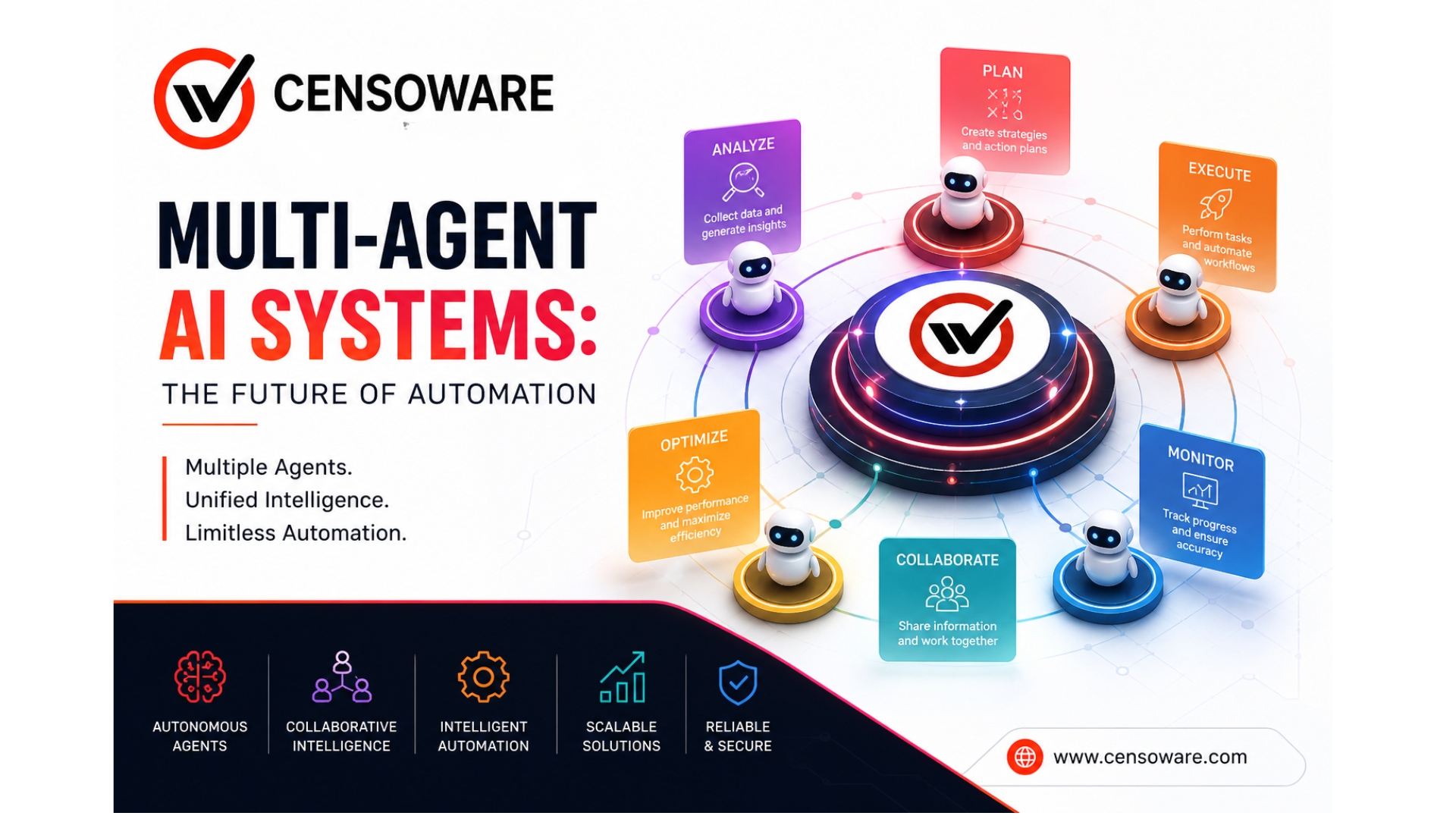
Multi-Agent AI Systems: The Future of Automation
Multi-agent AI systems are changing the way businesses automate work by combining multiple intelligent agents into one coordinated workflow. Instead of relying on a single AI model to do everything, these systems divide work into smaller tasks and let each agent handle a specific role. This makes automation more flexible, scalable, and useful for real business operations.
- Introduction
- What multi-agent AI systems are
- Why they matter for automation
- How they work in business environments
- Business applications
- Key benefits for organizations
- Common challenges and best practices
- Future of automation
- Frequently asked questions
Automation has already helped businesses save time and reduce repetitive work. But as workflows become more complex, basic automation tools often struggle to keep up. Multi-agent AI systems solve this problem by allowing several agents to work together on a single goal.
Each agent can focus on one part of the process. One may collect information, another may analyze it, another may create output, and another may take action. This approach makes the whole system smarter and more efficient than a single automation flow.
What Multi-Agent AI Means
A multi-agent AI system is a setup where multiple AI agents collaborate to complete a task. Each agent has a specific role, and together they work toward a shared result.
This is different from traditional automation, where a process usually follows a fixed set of rules. In a multi-agent system, the workflow is more dynamic because agents can communicate, coordinate, and respond to changing input.
For example, in customer support, one agent may identify the customer issue, another may search for the best answer, another may draft the response, and another may decide whether the case needs human attention. This makes the workflow smoother and more intelligent.
Multi-agent AI is especially useful when tasks require multiple steps, judgment, or communication between different parts of a business.
Why It Matters
The reason multi-agent AI matters is that many business tasks are not simple one-step actions. They involve research, analysis, approvals, communication, and follow-up. A single automation script often cannot manage that level of complexity well.
Multi-agent systems solve this by breaking work into smaller parts and assigning them to specialized agents. This makes automation more practical for departments like HR, marketing, sales, customer support, finance, and operations.
The result is not only faster execution but also better structure, better control, and better scalability. Businesses can automate more without losing quality.
How These Systems Work
A multi-agent AI system usually starts with a coordinator agent. This agent understands the overall goal and decides how the task should be divided. Then specialized agents handle their own responsibilities and share results with one another.
Some agents collect data from documents, websites, emails, databases, or internal systems. Others analyze that data, create summaries, generate responses, or trigger actions in connected tools. The coordinator keeps the process organized and makes sure the final result matches the goal.
Many systems also use memory and external APIs to improve performance. This allows the agents to work with live data and handle real business tasks instead of only producing text.
For example, a lead management workflow may include one agent that reads a form submission, another that checks qualification criteria, another that drafts a reply, and another that updates the CRM. Together, they create a complete automation flow.
Business Applications
Multi-agent AI systems can be used across many business functions because they handle complex workflows very well.
Marketing
Agents can research topics, generate draft content, optimize SEO, and support publishing. This helps teams produce more content in less time while keeping the workflow organized.
HR
Agents can screen resumes, compare candidates with job descriptions, summarize interview feedback, and prepare onboarding notes. This saves time and improves hiring efficiency.
Sales
Agents can qualify leads, personalize outreach, update CRM records, and track follow-ups. This improves response time and consistency.
Customer Support
Agents can classify tickets, answer common questions, and escalate urgent cases. This helps businesses provide faster and more reliable service.
Operations
Agents can track approvals, update dashboards, send alerts, and manage recurring workflow actions. This makes internal processes easier to control and monitor.
Key Benefits
Multi-agent AI systems offer several important benefits for modern businesses:
- Improve efficiency by dividing work into specialized tasks.
- Reduce manual effort in repetitive workflows.
- Support better accuracy through role-based processing.
- Make it easier to scale automation across teams.
- Adapt better when inputs or conditions change.
- Improve coordination between different tools and systems.
These benefits are especially valuable when businesses want automation that does more than just repeat simple actions. A single AI tool may answer questions or generate content, but a multi-agent system can manage an entire workflow from start to finish. That is what makes it powerful.
Challenges and Best Practices
Even though multi-agent AI systems are promising, they also bring challenges. One of the biggest issues is coordination. If the roles are not clearly defined, agents may duplicate work or produce conflicting results. Security and data privacy are also important, as agents may access sensitive business information.
Best Practices For Adoption
The best way to adopt multi-agent AI is to begin with one clear use case. Choose a workflow that is repetitive, measurable, and valuable enough to automate. Next, define each agent’s role carefully. Every agent should have a clear purpose, input, and output. This prevents overlap and keeps the workflow clean.
Use a coordinator agent to manage the overall process, and keep human review in place for important decisions. This creates a balanced system that is both efficient and safe.
Future Of Automation
The future of automation is moving toward intelligent collaboration rather than isolated task execution. Multi-agent AI systems are a major part of that shift.
As businesses need faster decisions, more personalized service, and more efficient operations, multi-agent systems will become increasingly valuable. They can support larger workloads, connect with more business tools, and adapt to changing needs more easily than traditional automation.
This means the next phase of automation will not just be about replacing manual tasks. It will be about building AI-driven workflows that can think, coordinate, and act in a structured way.
Frequently Asked Questions
What is a multi-agent AI system?
A multi-agent AI system is a setup where multiple AI agents work together to complete one larger task. Each agent handles a specific part of the workflow, such as collecting data, analyzing information, or generating output.
How is it different from traditional automation?
Traditional automation usually follows fixed rules and repeated steps. Multi-agent AI systems are more flexible because they can coordinate between several agents, adapt to changing input, and handle complex multi-step tasks.
Why are multi-agent AI systems important for businesses?
They are important because many business tasks need coordination, not just repetition. They help businesses save time, reduce manual work, and improve productivity across departments like HR, sales, and support.
Can small businesses also use multi-agent AI systems?
Yes, small businesses can benefit from them very well. Even a small team can use multi-agent automation to save time on lead follow-up, customer replies, reporting, and content support.
Do multi-agent AI systems replace human workers?
No, they are meant to support people by handling repetitive and time-consuming tasks. Humans are still needed for strategy, judgment, creativity, and final approval. The best model is a combination of AI support and human oversight.
Conclusion
Multi-agent AI systems are shaping the next generation of automation. By using multiple intelligent agents that work together, businesses can handle complex workflows more effectively and reduce the burden of manual work. As organizations continue to adopt AI, multi-agent systems will play a major role in building efficient, scalable, and intelligent workflows.
Censoware helps businesses leverage multi-agent AI to transform their operations. Talk to our team to discover how coordinated AI workflows can drive your business growth.